On this National Day of Appreciation for Abortion Providers, it’s more important than ever that New Jersey invests in building more opportunities to access abortion care. That means increasing support for and expanding the number of facilities so that patients can safely, easily, and affordably access the health care they need. By uplifting and listening to the voices of leaders who are deeply in the work, we can continue working together and advocating for reproductive freedom for all.
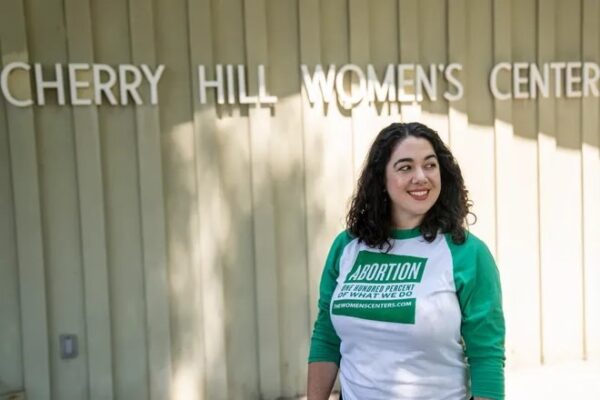
One of these leaders in New Jersey is Roxanne McNellis (née Sutocky) (she/her), who serves as Director of Public Affairs for The Women’s Centers, a group of independent abortion providers located in Connecticut, Pennsylvania, and in New Jersey at Cherry Hill Women’s Center.
For the last decade, McNellis has supported people seeking abortions, and facilitated educational, political, and volunteer opportunities for community members. In her role with The Women’s Centers, McNellis works to break down misinformation and stigma surrounding abortion care while advancing opportunities for clinical training and research. She is deeply committed to building strong coalitions and cross-movement partnerships, envisioning a future where everyone can access reproductive health care when we need it, laws support each of us, and all pregnancy decisions are met with love and support.
The ACLU of New Jersey spoke with McNellis about how the U.S. Supreme Court’s ruling in Dobbs v. Jackson Women’s Health Organization in 2022 – which overturned Roe v. Wade and ended federal protection for abortion rights – continues to impact our country and state. We discussed a range of issues, including how structural racism, economic inequality, and longstanding disparities impact access to abortion care, and what New Jerseyans can do right now to protect and support health care access.
Read the Q&A below.
ACLU-NJ: Thank you so much for your work and taking the time to speak with us. Why is protecting the right to abortion care so important?
Roxanne McNellis: At Cherry Hill Women’s Center, we see every day how essential abortion care is to the well-being of our communities. As providers, we understand abortion care as both a moral and societal good and a critical component of people’s health, autonomy, and economic security. Protecting the right to abortion care ensures that people can make their own decisions about their lives and families.
That understanding is grounded not only in our experience, but also in research. Cherry Hill Women’s Center was a site of the Turnaway Study, the first longitudinal study to follow people who received abortion care and those who were denied it due to gestational limits. The findings were clear. People who accessed abortion were overwhelmingly confident in their decisions over time, while those denied care were more likely to experience poverty, remain tied to abusive partners, and face serious health complications.
New Jersey law affirms the fundamental right to decide whether and when to have children, including access to contraception, pregnancy care, and abortion. However, rights alone are not enough. Protecting abortion care means ensuring people can truly access services when they need them, with dignity and support.
ACLU-NJ: How has the Dobbs ruling changed access to abortion care?
McNellis: Dobbs overturned nearly fifty years of federal protections for abortion and fundamentally reshaped access across the country. Today, abortion is banned outright in thirteen states, and many others impose restrictions that make it more difficult for patients to obtain care.
What Dobbs has not changed is the need for abortion care. People continue to seek abortion for the same reasons they always have: to care for their families, protect their health, and make decisions about the timing of parenthood. Pregnant people seeking abortion who live in states that ban or restrict care must travel out of state or try to obtain medication abortion through telehealth.
States like New Jersey have become critical access points. At Cherry Hill Women’s Center, nearly a quarter of our patients have traveled from out of state for care, and our teams are acting not only as medical providers, but also as travel planners, systems navigators, and sources of structural and emotional support.
Patients are navigating increasingly complex systems, while clinics, abortion funds, and practical support organizations collaborate to help overcome barriers like travel, cost, childcare, and time away from work. Despite Dobbs, abortion care continues, reflecting the resilience of people seeking care and the networks working to support them.
ACLU-NJ: How have barriers to abortion care affected marginalized communities?
McNellis: Barriers to abortion care have never been experienced equally.
Just four years after Roe was decided, Congress passed the Hyde Amendment, banning Medicaid from covering abortion care and forcing many people with low or no incomes to pay out of pocket or delay care while gathering the funds they need. Over time, court decisions and state laws chipped away at access, reducing the number of providers and increasing the cost, travel, and time required to obtain care. Structural racism, economic inequality, and longstanding disparities mean Black, Brown, and Indigenous communities, LGBTQIA+ people, immigrants, young people, people with disabilities, and those working to make ends meet are less likely to have the financial resources, time, or flexibility to overcome the barriers created by abortion restrictions.
Today, in the wake of Dobbs, those inequities are sharpening. In states where abortion is banned or heavily restricted, patients may delay seeking care or be denied treatment altogether because clinicians fear legal consequences. Some are forced to continue pregnancies they did not plan. These dangerous laws are leading to devastating and often preventable outcomes, including delayed emergency care, serious health complications, and deaths that disproportionately impact Black women in a country already facing a severe Black maternal health crisis.
At the same time, growing surveillance and criminalization of pregnancy outcomes continue to place Black and Brown communities, who are already more likely to be policed and surveilled, at heightened risk. In the first two years after Dobbs, more than 400 people were criminalized for their pregnancy outcomes.
What this moment is revealing is something abortion providers and advocates have long known. The communities already facing the greatest barriers are the ones who bear the greatest harm.
ACLU-NJ: What are the most important actions people in New Jersey should be taking to protect abortion rights?
McNellis: New Jersey has taken important steps to protect abortion rights. Our state has decades of Supreme Court precedent affirming abortion rights, and, in 2022, the state passed the Freedom of Reproductive Choice Act, codifying the right to abortion into state law. However, rights on paper alone are not enough. They must be paired with meaningful access to care for everyone.
People across New Jersey can urge their elected officials to advance policies that ensure reproductive health care remains accessible and affordable. That includes investing in the reproductive health care infrastructure, strengthening provider capacity, ensuring comprehensive insurance coverage and funding for essential care, and protecting Medicaid from federal cuts that would place care further out of reach for many families. New Jersey leaders should also take steps to protect patients and providers from rising anti-abortion extremism and hostile anti-abortion state overreach. They should also work to ensure that people are not punished for their pregnancy outcomes by removing outdated laws that could criminalize pregnant people and reducing policies that lead to increased surveillance and criminalization.
People can also play a role by supporting local abortion providers, abortion funds, and practical support organizations that help patients navigate barriers like travel, childcare, and cost. Staying informed and challenging misinformation and stigma about abortion is equally important.
Protecting access requires engagement and community solidarity.
ACLU-NJ: What does abortion mean to your patients personally?
Roxanne McNellis: For our patients, abortion is not an abstract political issue. It is about the realities of their lives and the responsibilities they carry. Many are already parents making thoughtful decisions about how to care for the children they have. Others are navigating financial instability, educational goals, relationship circumstances, or health concerns.
One of the things we hear about most from patients is affordability. People are doing the math of their lives, rent, groceries, childcare, and transportation, and trying to determine what is possible.
At the same time, this moment exposes contradictions in our public policy. While some lawmakers continue to focus on banning abortion, we have also seen policies that restrict access to contraception and family planning, weaken Affordable Care Act and Medicaid protections that help people access reproductive and prenatal care, and expand immigration public charge rules that discourage families from seeking basic health and nutrition supports. Persistent gaps in childcare, paid leave, and maternal health infrastructure make it harder for many families to safely continue pregnancies and raise children.
Ultimately, the people we care for are making thoughtful decisions about their own lives and families. Everyone deserves the freedom to make decisions about pregnancy with dignity, support, and access to care. At its core, abortion access is about trust, fairness, and justice. People deserve the ability to shape their own futures and build families under conditions that allow them and their children to thrive.