
Everyone deserves to feel and be safe when they drive.
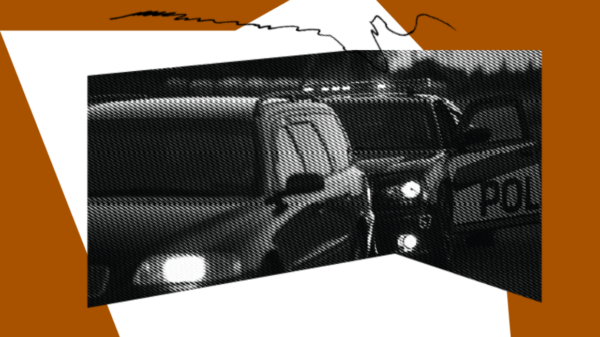
Every year, police officers conduct tens of millions of traffic stops across the United States. These stops are supposed to keep communities safe by addressing dangerous behaviors that injure and kill people – like speeding, reckless driving, and drunk driving.
However, many of the over 200 traffic violations in New Jersey’s traffic code have little, if anything, to do with road safety. In fact, the traffic code is so broad that many, if not most, drivers are likely to break the law on any given trip.
When a driver is pulled over for one of these minor violations – such as equipment violations like broken taillight or administrative violations like expired registration – that is known as a non-safety traffic stop. These violations rarely contribute to dangerous or deadly accidents; in New Jersey from 2010-2023, headlights, signal lights, other lights, mirror, window, or windshield violations of any kind contributed to only 0.38% (45 out of 11,750) of fatal crashes.
Non-safety traffic stops damage the relationship between the public and police, especially among communities of color. They are often used to conduct pretextual stops – in which an officer uses a minor traffic violation to initiate a stop and pursue further investigation in hopes of discovering more serious offenses. They can lead to high-pressure and violent interactions with officers over trivial infractions that are inconsequential to road safety.
Non-safety traffic stops – and by proxy, pretextual stops – are a significant source of over-policing in Black and brown communities. New analysis of more than six million traffic stops in New Jersey between January 2009 and May 2021 found that Black people accounted for 18.8% of all drivers pulled over, despite comprising 8.2% of New Jersey drivers, and Black drivers accounted for 36.5% of all searches.
Additionally, non-safety traffic stops divert resources away from addressing driving behaviors that endanger lives and threaten constitutional protections. Because non-safety traffic violations are so common, whenever anyone drives, they could be subjected to a pretextual stop and investigated. This undermines our Fourth Amendment protections against unreasonable searches and seizures – in other words, everyone deserves to drive without fear of being arbitrarily pulled over.
The ACLU of New Jersey recently published “New Jersey’s Road to Safety and Racial Justice: Reducing Non-Safety Traffic Stops,” a report that includes examples of cities and states that have already reformed their traffic codes with great success. The report also cites public opinion polling that shows New Jerseyans widely support such reforms and makes recommendations for potential policies in New Jersey.
The report urges lawmakers to modernize the traffic code to increase public safety. This includes reforming the traffic code to focus on violations that pose an immediate, direct threat to public safety. In cities and states around the country where this type of reform has already been implemented, fatal crashes have dramatically declined and racial disparities in enforcement have lessened.
New Jersey should focus its resources on preventing accidents and saving lives, not conducting non-safety traffic stops that drive racial disparities in policing. New Jersey legislators must prioritize road safety and promote racial justice by reducing non-safety traffic stops.
It’s time for New Jersey to get into gear.
This piece, written by Lauren Aung, was originally published in the New Jersey Monitor.
Lauren Aung (she/her) is a policy fellow at the ACLU of New Jersey, where she focuses on criminal legal reform. Lauren joined the ACLU-NJ in 2024 and first served as a Garden State Fellow.
While at the ACLU-NJ, Lauren has led legislative campaigns related to fines and fees in the criminal legal system and pretextual traffic stops. Before joining the ACLU-NJ, Lauren worked at the George Floyd Global Memorial, a racial justice advocacy nonprofit in Minneapolis. Lauren is a graduate of Princeton University.