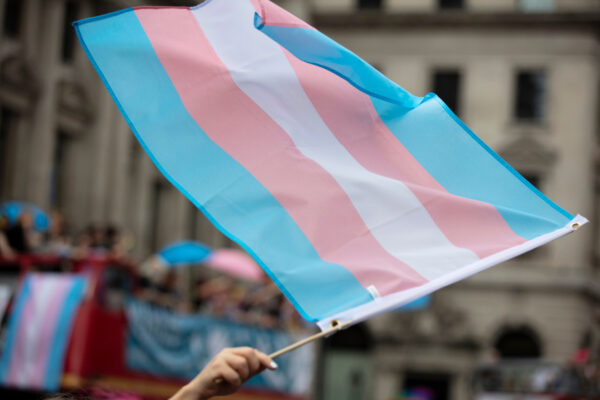
The freedom to be who you are is not a radical idea – it is a fundamental right that everyone deserves.
Today, on Transgender Day of Remembrance, we honor the transgender and gender diverse people who we have lost because of transphobic and transmisogynistic violence.
Trans people in the United States are experiencing an epidemic of violence, especially Black trans communities. In recent years, the Trump administration has vigorously issued a slew of executive actions targeting LGBTQ+ people, and last June, the Supreme Court dealt a major blow to trans youth, their families, and the communities that support them.
Today, we commemorate those who are no longer with us, and in their memory, reaffirm our commitment to fight for safety and justice for all.
We spoke with Damien Alan Lopez, director of trans resiliency at Garden State Equality, about the importance of Transgender Day of Remembrance, what New Jersey has done in recent years to protect and defend transgender people, and how our communities can get involved and advocate for trans justice.
ACLU-NJ: On this Transgender Day of Remembrance, as LGBTQ+ communities face an increasingly hostile federal government, what message would you like to share with our readers?
Damien Alan Lopez: Transgender Day of Remembrance serves as the end of Trans Awareness Week. In conjunction with honoring and mourning those we have lost, it must also be about our responsibility to support and protect those who are still here. Transgender and gender diverse people deserve lives that extend beyond survival. We deserve to experience joy, build families, and exist without constantly defending our identities.
I also want to amplify to allies that solidarity requires action. It is not enough to say you support trans people; we need you to demonstrate that support every day. This means supporting trans and gender diverse folx by referring to them by their correct pronouns, donating to trans GoFundMe campaigns to support trans health care, and showing up to testify against anti-trans legislation and policies.
ACLU-NJ: How do protections for transgender people help create a healthier and safer society for everyone, no matter their gender identity?
Lopez: Transphobia affects everyone. Cisgender women – whether they present more masculine, are not white, or simply don’t meet ever-changing feminine beauty standards – face a similar type of gender policing experienced by their trans sisters. When we talk about protections for transgender people, we are talking about the fundamental conditions that allow everyone to live safe, healthy, and meaningful lives. Access to health care, housing, employment, education, and protection from discrimination should never depend on someone’s gender identity or expression. Those protections benefit everyone by establishing expectations of dignity and respect. When schools, workplaces, and health care providers are inclusive, affirming, and culturally competent, entire communities benefit. Protecting one community does not take anything away from another – it strengthens us all.
ACLU-NJ: What has New Jersey done in recent years to protect, defend, and advocate for transgender communities?
Lopez: New Jersey has many protections for transgender and gender diverse residents. This includes the robust New Jersey Law Against Discrimination, the Babs Siperstein Law, and, most recently, the Reproductive and Transgender Health Care Shield Law. The latter, signed into law earlier this year, creates specific state-level protections for patients and providers of gender-affirming and reproductive health care. These efforts reflect years of advocacy from transgender and gender diverse people, community leaders, legislative allies, organizations, and everyday people throughout New Jersey. Beyond legislation, organizations have continued creating spaces for support, resources, and connection.
ACLU-NJ: How can New Jersey do more to advance the rights and safety of transgender people?
Lopez: Though New Jersey is a leader in codifying protections for trans and gender diverse people, the work is far from done. We need greater investments in affordable gender-affirming health care, culturally competent mental health services, housing, employment opportunities, and legal resources. We also need to invest in community-based organizations doing the work. Too often, organizations are expected to address significant systemic gaps without the funding or staffing necessary to sustain their efforts. Protecting transgender and gender diverse communities requires more than legislative protections; it requires long-term investment, accountability, and community partnerships.
ACLU-NJ: How can our communities get involved and advocate for trans justice?
Lopez: Trans justice cannot be the responsibility of transgender people alone. Everyone has a role to play, whether that means contacting elected officials, supporting community organizations, volunteering, or educating themselves about legislation impacting our communities. Some people can get discouraged about what it means to be an ally, but advocacy also happens in everyday interactions: correcting someone who misgenders a colleague, supporting transgender students, and challenging discrimination when we witness it. The smaller steps toward allyship also have a large impact. Honoring transgender lives means showing up for our community not during moments of tragedy, but also in everyday efforts to protect and celebrate one another.