
By completing this form, I agree to receive occasional emails per the terms of the ACLU’s privacy statement.
Last updated on April 29, 2026
Questions about the 2026 Primary Election? We've got answers.
In every election, we decide who will represent us. Those representatives have a say on our most fundamental rights and the issues that impact us and our communities every day. Regardless of the issues that are important to you, be it healthcare, the criminal legal system, immigration, social and racial issues, civil rights and liberties, or any other issues, it is important that you make your voice heard.
New Jersey primary elections will be held on June 2, 2026 – whether you plan to vote by mail, in-person during early voting, or on Primary Election Day, we hope you cast your ballot with your values in mind.
A primary election is an election in which voters of New Jersey’s statutory political parties (Republicans and Democrats) determine which candidates will appear on the ballot as their parties’ nominee in the general election. The candidate that wins the primary election goes forward to the general election, against an opposing party candidate who was also elected by members of their party to represent them, as well as any candidates that were nominated by petition.
In New Jersey, only voters who are registered with the Republican or Democratic party can vote in their party’s primary election, whereas in a general election, voters can vote for anyone regardless of party affiliation.
Unaffiliated voters interested in voting during the primary may declare a party affiliation the following ways:
After declaring a party affiliation through any of these methods, the voter will be considered a member of that political party in the future, unless they make a subsequent change.
Unaffiliated voters who request a vote-by-mail ballot and change their party affiliation by May 26, 2026, are eligible to receive a vote-by-mail ballot in time for the primary election.
It should be noted that, unlike unaffiliated voters who are registered to vote but not affiliated with any political party, registered voters who are affiliated with a different political party must have changed their political party affiliation by April 8, 2026, to vote in the party’s primary election. Therefore, it is too late for such voters to change their affiliation in time to vote in that other party’s primary election.
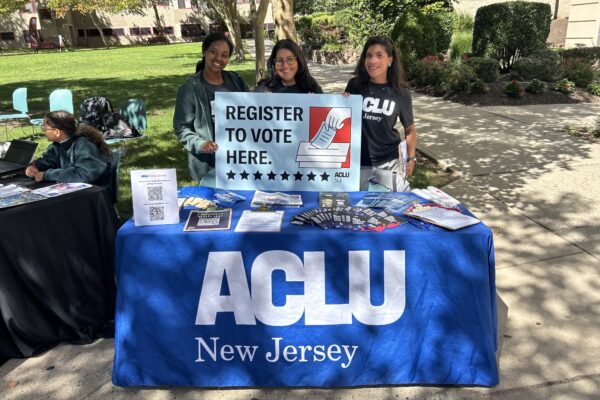
The deadline to register to vote in the 2026 Primary Election is Tuesday, May 12, 2026. Check your registration status and register to vote here.
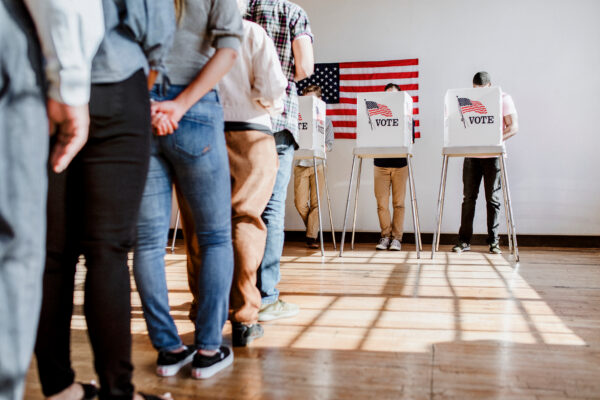
Primary Election Day in New Jersey is Tuesday, June 2, 2026. Polls are open on Primary Election Day from 6 a.m.-8 p.m. Find your Election Day polling place here.
Early voting is also available to New Jersey voters. You can vote early in person from May 26, 2026, to May 31, 2026. Only certain polling locations are open during this time, but you can vote at any of the locations in your county. Find the early voting locations for your county here. Early voting locations will be open from 10 a.m.-8 p.m. on Monday through Saturday, and from 10 a.m.-6 p.m. on Sunday.
In addition to in-person voting, New Jerseyans have the option to vote by mail. You may vote by mail by completing an application and returning it to your county clerk. The county clerk must receive your mailed application by May 26, 2026 (7 days prior to the election). You may also apply in person at your county clerk’s office until 3 p.m. on June 1, 2026, the day before the election.
Once you have applied for and received a vote-by-mail ballot, you can return your ballot in one of three ways: by mail (postmarked by 8 p.m. on primary election day, June 2, 2026), using a ballot drop box (deposited by 8 p.m. on primary election day, June 2, 2026), or in person at your county Board of Elections office (by 8 p.m. on primary election day, June 2, 2026). Voters should be mindful that, pursuant to recent guidance issued by the United States Postal Service, it is possible that the postmark on your ballot may not reflect the actual date that your local post office receives it, and instead may reflect the date on which it is first received by Regional Processing and Distribution Center. As such, voters choosing to return their vote may mail ballots by mail are encouraged to do so sufficiently in advance of Election Day. Track the progress of your ballot here.
Before you step into a polling booth, be sure to know your rights.
Being informed is being prepared. Ensure you're prepared this election season and know your rights.
If you experience any problems at the polls, be sure to call the NJ Division of Elections at 877-NJ-VOTER or the Election Protection Hotline. Expand to see Election Protection Hotlines in more languages.
Displaying political signs on your property is a fundamental practice of free speech and expression.
Displaying political signs on your property – whether in your yard or your window – is a fundamental practice of free speech and expression protected under the U.S. Constitution and the New Jersey Constitution. Political signs often promote a particular candidate for public office or a ballot measure, but political signs also include messages in support of a cause or principle, like “Black Lives Matter,” or other messages of public interest. While the right to display political signs on private property is not absolute, it is protected under the law.
For college students, it can be especially difficult to know if you’re eligible to vote, how to register, and where to cast your ballot. Know your rights.
Voting is the cornerstone of our democracy and the fundamental right upon which all our civil liberties rest. For college students, it can be especially difficult to know if you’re eligible, how to register, and where to cast your ballot. To vote your values, here’s what you need to know.
Where you vote is determined by the address that you use to register to vote. As a college student, you may register to vote using your college address or your parent/guardians’ home address, depending on which district you prefer to vote in.
Voting is the cornerstone of our democracy and the fundamental right upon which all our civil liberties rest. For college students, it can be especially difficult to know if you’re eligible, how to register, and where to cast your ballot. To vote your values, here’s what you need to know.
Where you vote is determined by the address that you use to register to vote. As a college student, you may register to vote using your college address or your parent/guardians’ home address, depending on which district you prefer to vote in.