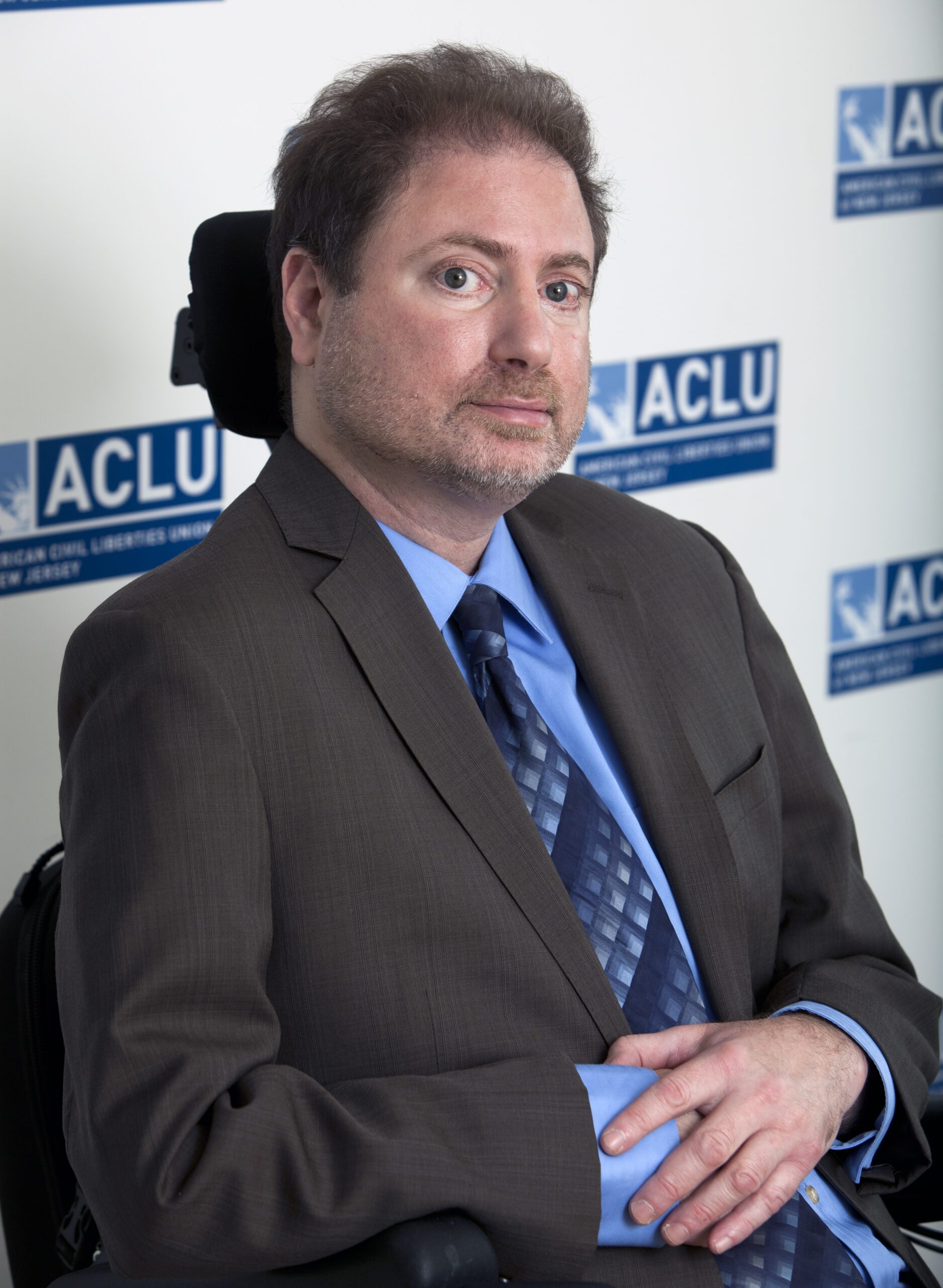
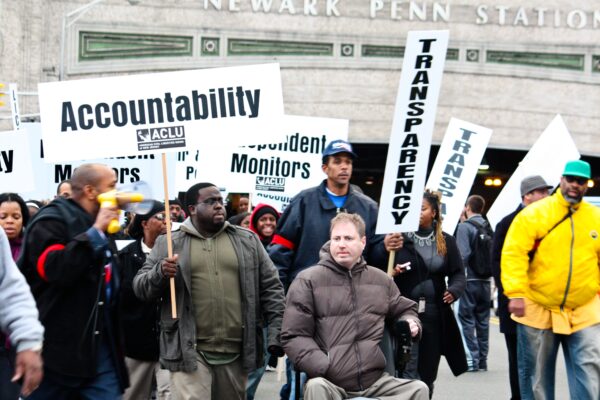
For nearly two decades, Ed Barocas served as legal director at the ACLU of New Jersey. Throughout his tenure, he oversaw the ACLU-NJ’s work in landmark cases involving free speech, same-sex marriage, religious freedom, government secrecy, and more, shaping New Jersey’s civil rights landscape with the unwavering mission to build a fair and equitable New Jersey for all.
He has now published a memoir, Chasing Justice and Butterflies: A Memoir of Overcoming and Becoming (available at Amazon and other online sites), chronicling his legal career and personal anecdotes with his characteristic curiosity and wit.
We spoke with Barocas about writing his memoir, his time as the ACLU-NJ Legal Director, and his hopes for the impact of telling his story.
ACLU-NJ: What inspired you to become a public interest lawyer?
Ed Barocas: As I explain in my memoirs, as a little kid, I had two heroes: Curious George and Horton the Elephant (from Horton Hears a Who). Curious George was always getting into trouble, just by being himself. But in the end, George not only created joy for himself, but for others as well, simply by acting on his natural inclinations and making sure to live literally “outside the box.” I thought it was important that everyone has the right to live their true nature or live outside the norm.
Horton’s huge elephant ears were able to hear the people of Whoville, who lived on a speck of dust. The Whos deserved to be protected because “a person’s a person, no matter how small.” The other animals, who couldn't hear the Whos, bullied him. When all seemed lost, he got the idea that, if the people of Whoville banded together and jointly made as much noise as they could at once, their voices would finally be heard. And that is what happened. He kept the Whos’ cause alive when they could not do it alone, and through his efforts, helped amplify their voices. That empathic elephant was the heroic role model image that I carried throughout my life.
My work allowed me to feel like my childhood heroes: like Curious George, I always had a sense of awe and excitement because the cases were never dull, and I was able to help ensure that others could live to their true nature or outside the box. And like Horton the Elephant, I got to be the voice of those who needed one. I look back now with both the child and adult in me quite fulfilled.
ACLU-NJ: What was the most impactful issue you worked on while you were legal director of the ACLU-NJ?
Barocas: I was asked during the ACLU-NJ Legal Director job interview what would be the two most important issues facing New Jersey’s civil rights arena over the next five years. I answered same-sex marriage and legalization of marijuana. Clearly, the ACLU-NJ’s battles leading up to, during, and even after obtaining marriage equality cannot be minimized. But as I drove into our Newark office on the morning of September 11, 2001, the entire focus of our organization changed on a dime. The ACLU became the main bulwark against illegal government surveillance, secret roundups of immigrants, harsh tactics to quell dissent, and government secrecy – all issues that resonate today. New Jersey was at the heart of many of those battles during the 2000s. So, I think the most important impact was making sure the government knew that their excesses, even during times of crises, would neither go unseen nor unchecked. We would be there to watch and to challenge them.
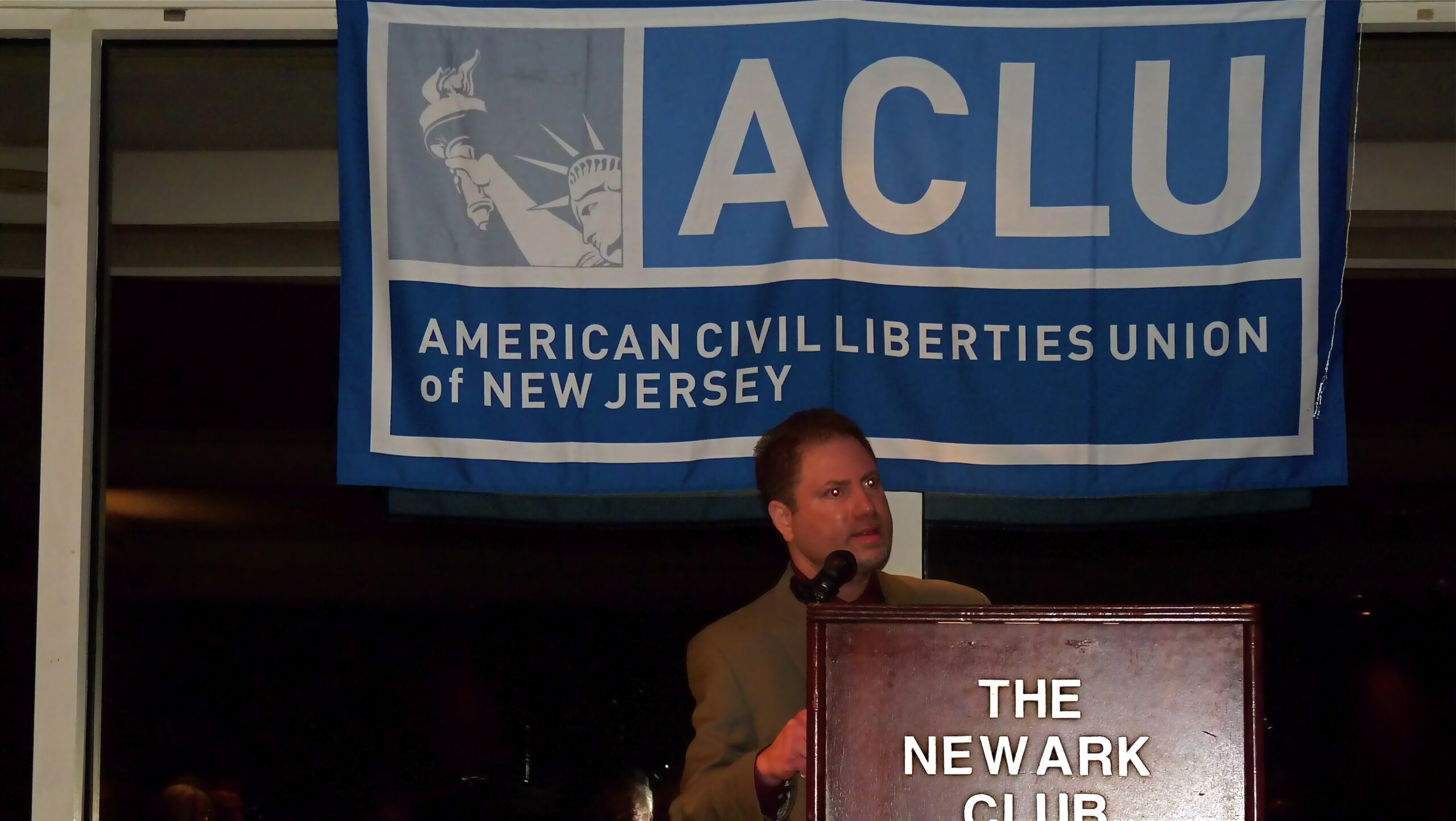
ACLU-NJ: How do you think your lived experiences influenced how you approached the legal work you led at the ACLU-NJ?
Barocas: As a child, I knew I had a disability that would get worse throughout my life. But I always had a close family, a strong personality, and many close friends, so knowing I was somehow different did not devolve into feeling like an outcast. The understanding of being different was instead directed outward, as empathy for others who were different from “the norm.” Because I had the security of family and friends at a young age, I felt empowered to speak out for other “outsider-the-boxers" who were bullied or excluded and were afraid or unable to speak up for themselves. From grade school and beyond, I reveled in taking up the cause of the underdogs. I never felt such a sense of strength as when I would stand up for someone who was being wronged, especially when I succeeded in setting things right.
My disability also made me have to think both logically and creatively, and to adapt. When obstacles arose, I would step back, look at the big picture, think logically, consider a new approach, and find a new way. I was therefore conditioned to notice every crack or imbalance that could upend a case, to see every potential roadblock, and to think logically and creatively in crafting the best course of action.
ACLU-NJ: What motivated you to write this memoir?
Barocas: People always enjoyed hearing stories about my interesting cases or clients, or how I ended up fronting a comedy band in the 2000s with members of famous 70s/80s rock bands, or how one of Eminem’s top managers ended up producing my music video, or about my unique travels and intriguing people I met around the country. After my disability deteriorated to the point I had to retire, a number of people convinced me to write my memoirs. I had to organize most of it in my head and then dictate a few paragraphs each night into my phone. It was a good way to keep my mind active, as my body was becoming increasingly limited.
I knew I could write a good brief or comedy song, but this was a unique challenge. When I showed people the first two chapters and they loved them, I felt proud and felt compelled to continue. I don’t know how much time I have left. But I can feel good leaving something behind that might inspire, inform, or even just give people a smile.
ACLU-NJ: What do you hope readers take away from your memoir?
Barocas: I think there are really two themes: one is about living life with joy and positivity and humor, regardless of what obstacles may be present. I would love if this book could help inspire people, not just those with disabilities, but anyone, to do so. We all have obstacles, some more obvious or greater than others. But how we deal with them determines the life we live.
The second is about living a life with meaning. For me, that meant taking a cue from my childhood hero Horton the Elephant and becoming a voice for the marginalized. That is why I was so passionate about being a lawyer and fighting for civil rights.